Monarchs of the Solar System
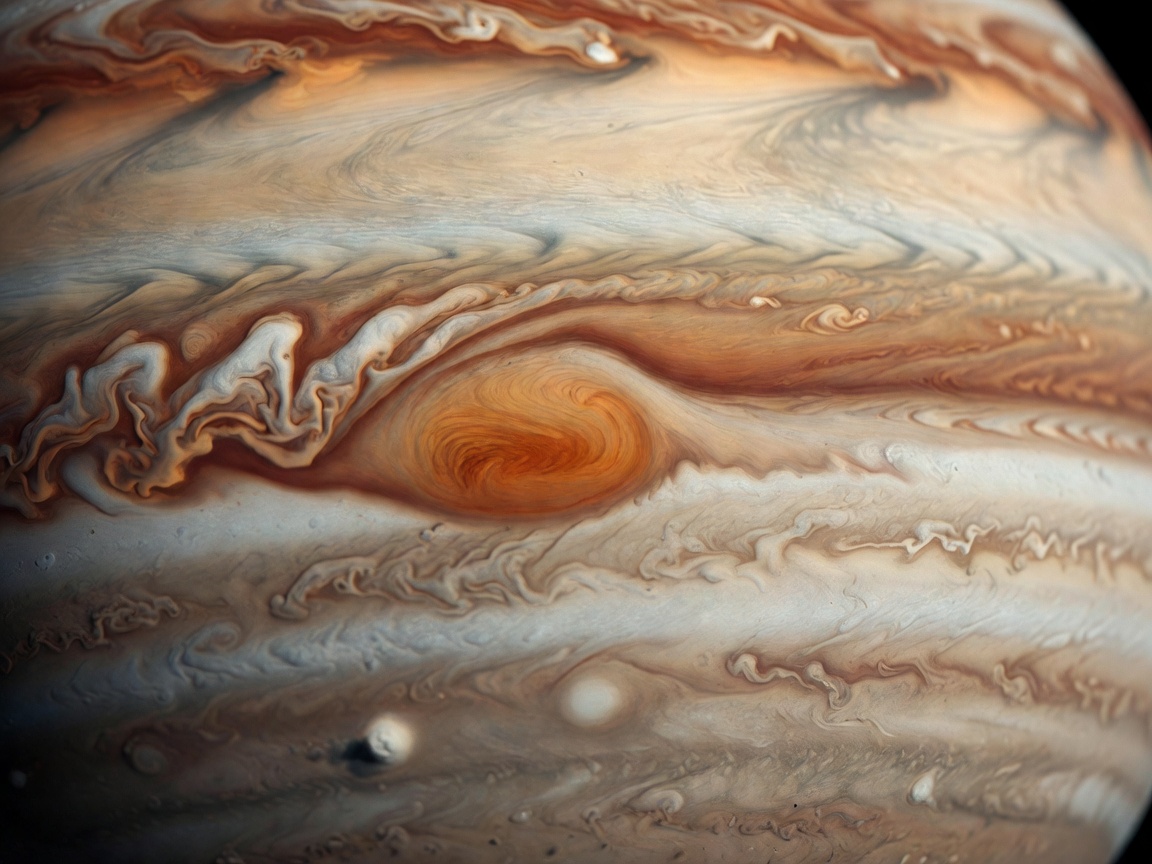
Beyond the frost line of our solar system, where volatile compounds could condense into solid ice during planetary formation, lie the titans: Jupiter, Saturn, Uranus, and Neptune. These monolithic worlds lack true solid surfaces, offering instead thousands of kilometers of deepening atmosphere that gradually transitions into supercritical fluids under crushing pressure.
The Rings of Saturn
Saturn stands as the undeniable jewel of the solar system. Its ring system is a staggering expanse of billions of ice and rock particles, varying in size from micrometers to mountains. These rings are not static; they are highly dynamic, governed by the complex gravitational resonance of Saturn's numerous moons.
Cassini's grand finale provided data revealing that these rings might be younger than previously thought—perhaps only 10 to 100 million years old, remnants of a shattered icy moon torn apart by tidal forces.
| Planet | Equatorial Radius (km) | Known Moons | Ring System |
|---|---|---|---|
| Jupiter | 71,492 | 95+ | Faint |
| Saturn | 60,268 | 146+ | Extensive & Prominent |
| Uranus | 25,362 | 27 | Faint & Dark |
| Neptune | 24,622 | 14 | Faint Arcs |
Ice Giants: The Outer Fringe
Uranus and Neptune are often classified distinctly as "Ice Giants". While they share the gaseous envelopes of their larger siblings, their bulk composition consists heavily of heavier elements—oxygen, carbon, nitrogen, and sulfur—which astronomers refer to as "ices". Neptune's supersonic winds and Uranus's extreme axial tilt continue to present contemplative mysteries to the modern astronomer.