Supernova Remnants
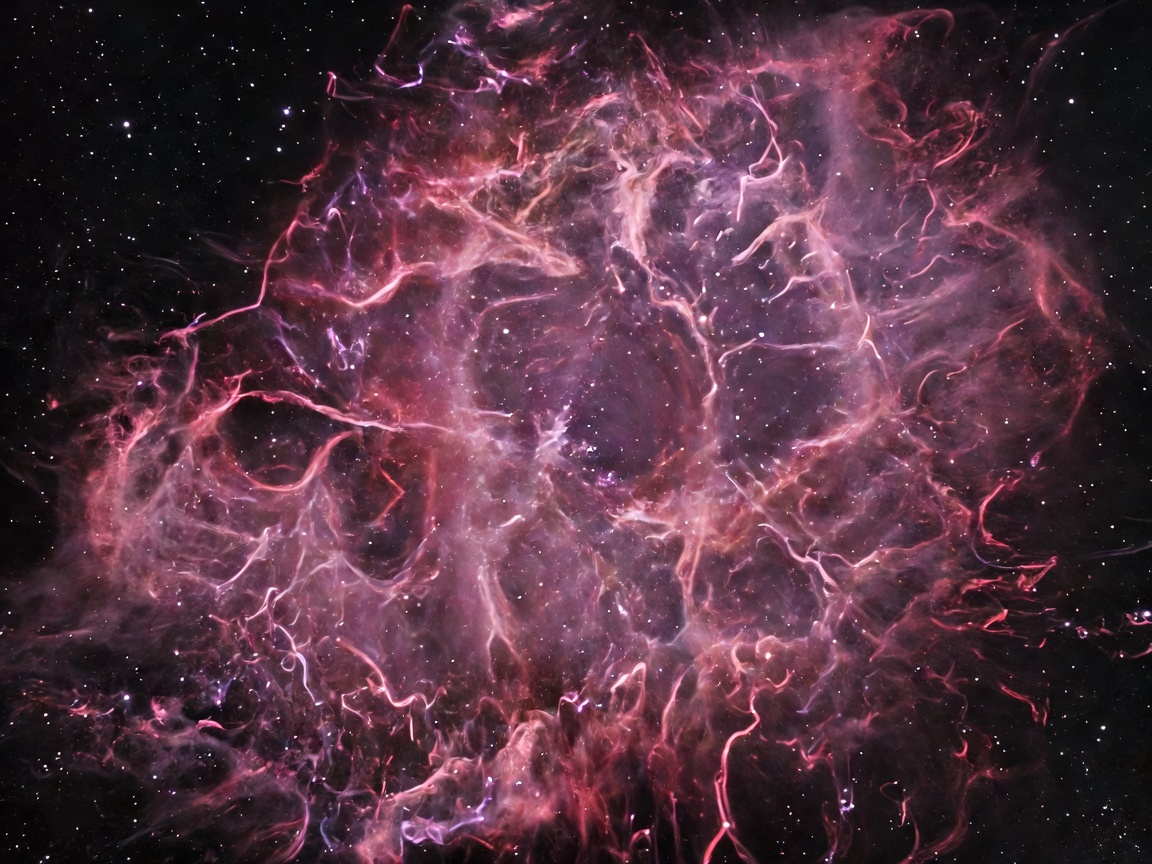
When a massive star exhausts its nuclear fuel, the resulting collapse triggers a shockwave of unimaginable power—a supernova. The expelled outer layers expand at thousands of kilometers per second, colliding with the surrounding interstellar medium. These supernova remnants, like the famous Crab Nebula, glow vibrantly across the electromagnetic spectrum.
These majestic events do more than destroy; they create. The heavy elements required for planets and biological life—iron, carbon, oxygen, gold—are forged in these explosive crucibles and scattered across the galaxy.
Emission and Reflection Nebulae
Not all nebulae are born of death. The Orion Nebula is a vibrant stellar nursery located just 1,344 light-years away. Within its swirling gas clouds, gravity draws material together until nuclear fusion ignites, birthing new stars.
Emission nebulae glow fiercely as high-energy ultraviolet radiation from nearby hot young stars ionizes the surrounding gas. Conversely, reflection nebulae do not emit their own light; instead, their dust grains reflect and scatter the light of nearby stars, offering a soft, contemplative glow in the deep cosmic void.
To view these structures through a telescope is to look back in time, witnessing the slow, majestic machinery of the universe at work.